

ACL Tear
What is the ACL and what does it do?
The anterior cruciate ligament (ACL) is one of the main ligaments inside the knee. It connects the thigh bone (femur) to the shin bone (tibia) and helps control forward movement and rotation of the knee.
The ACL is particularly important during activities involving turning, pivoting, landing and rapid changes of direction. When it is torn, the knee may become unstable during these movements.
Key Points
- The anterior cruciate ligament helps control forward movement and rotation within the knee.
- ACL tears commonly occur during pivoting, landing or sudden changes of direction.
- A tear may be partial or complete.
- Swelling, pain, a popping sensation and knee instability are common symptoms.
- Meniscus, cartilage or other ligament injuries can occur at the same time.
- Treatment depends on knee stability, associated injuries, activity level and individual goals.
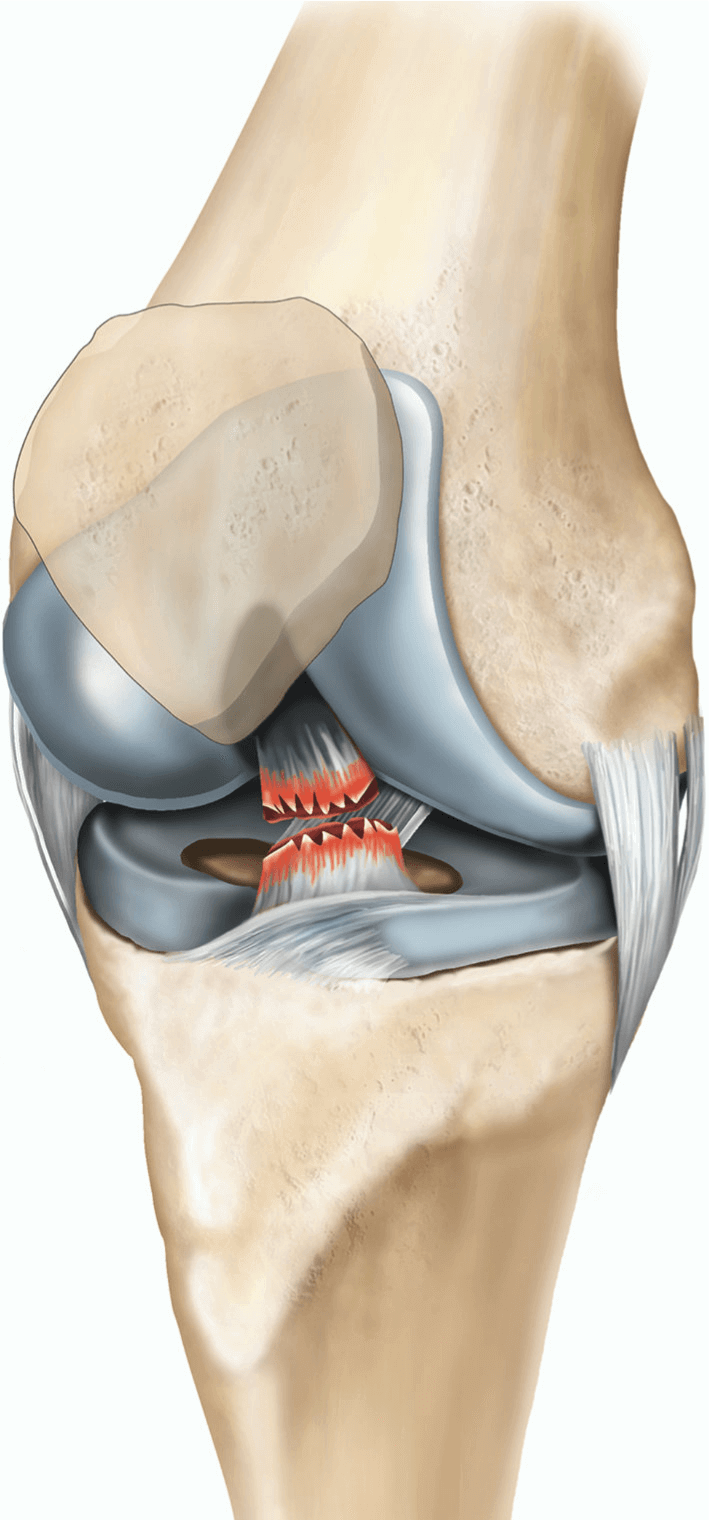
What is an ACL Tear?
An anterior cruciate ligament (ACL) tear is an injury to one of the main stabilising ligaments inside the knee. It may occur when the knee twists, pivots, changes direction suddenly or lands awkwardly.
ACL injuries range from stretching or partial tearing of the ligament to a complete rupture. Symptoms and treatment vary depending on the extent of the injury, knee stability, associated damage and the activities the patient wants to return to.
Dr Hayes assesses ACL injuries and other sports-related knee conditions at consulting locations across Brisbane.
What is the ACL and what does it do?
The anterior cruciate ligament is a strong band of tissue connecting the thigh bone (femur) to the shin bone (tibia). It is one of the major ligaments that keeps the knee stable.
The ACL lies within the centre of the knee joint. It helps prevent excessive forward movement of the tibia relative to the femur and helps control rotation.
This function becomes particularly important during activities involving:
- Running
- Pivoting
- Cutting or changing direction
- Jumping and landing
- Sudden stopping
- Uneven or unpredictable movements
When the ACL is torn, some people experience instability, meaning the knee feels as though it may shift, buckle or give way during certain movements.
How do ACL tears occur?
ACL tears commonly occur when the knee is subjected to a sudden twisting, rotational or stopping force. Many ACL injuries occur without direct contact with another person.
Common injury mechanisms include:
- Changing direction rapidly while the foot is planted
- Pivoting or twisting unexpectedly
- Landing awkwardly after a jump
- Stopping suddenly while running
- Hyperextending the knee
- Falling with the knee in an awkward position
- Direct impact or collision during sport
Sports involving repeated changes of direction, jumping or physical contact—including football, soccer, netball, basketball, rugby and skiing—commonly expose the knee to these movements.
An ACL injury can also occur outside sport, including during falls, workplace incidents or other accidents.
What are the symptoms of an ACL tear?
An ACL tear can cause a popping sensation, rapid swelling, pain, reduced movement and a feeling that the knee is unstable. Symptoms vary, and not every person experiences all of these features.
Common symptoms include:
- Hearing or feeling a "pop" when the injury occurs
- Sudden knee pain
- Swelling developing during the first several hours
- Difficulty fully bending or straightening the knee
- Difficulty continuing the activity
- Pain or difficulty bearing weight
- A sensation that the knee is unstable
- Episodes where the knee gives way during turning or pivoting
Some people can walk after an ACL tear once the initial pain settles. This does not necessarily mean the ACL is intact.
Symptoms may also be influenced by associated injuries to the meniscus, cartilage or other knee ligaments.
For a more detailed explanation of the immediate and delayed signs of injury, see ACL Tear Symptoms.
Partial versus Complete ACL Tears
An ACL injury may involve stretching of the ligament, a partial tear or a complete rupture. The degree of structural damage does not always predict how stable the knee will feel during everyday activities or sport.
| Feature | Partial ACL Tear | Complete ACL Tear |
|---|---|---|
| Ligament | Some fibres remain intact | Ligament is completely disrupted |
| Knee stability | May remain reasonably stable | Instability may be more likely |
| Symptoms | Pain and swelling can vary | Pain, swelling and instability can occur |
| Giving way | May or may not occur | May occur during pivoting or turning |
| Treatment | Often depends on functional stability | Depends on instability, activity goals and associated injuries |
| Surgery | Not always required | Not automatically required |
A Partial ACL Tear should therefore be assessed according to both the extent of ligament injury and how well the knee functions.
A person with a partial tear and a stable knee may have very different treatment needs from someone experiencing repeated episodes of giving way.
For more information about these injuries, including assessment and treatment considerations, see Partial ACL Tear.
What other injuries can occur with an ACL tear?
ACL tears can occur together with injuries to the meniscus, joint cartilage or other knee ligaments. Identifying associated damage can influence treatment and prognosis.
The meniscus is a C-shaped piece of fibrocartilage that helps distribute load and absorb forces between the femur and tibia. Each knee has a medial and lateral meniscus.
Associated injuries may include:
- Medial or lateral meniscus tears
- Articular cartilage damage
- Medial collateral ligament (MCL) injury
- Injuries to other knee ligaments
- Bone bruising
- Less commonly, fractures or avulsion injuries
Meniscus injuries can cause additional symptoms such as joint-line pain, catching, or locking.
Repeated episodes of instability may also expose the meniscus and cartilage to further injury. However, the likelihood and extent of future joint damage vary between individuals.
How is an ACL tear diagnosed?
Clinicians usually diagnose an ACL tear by considering how the injury happened, the symptoms, a physical examination, and, when appropriate, imaging such as an MRI scan.
Assessment commonly starts with questions about:
- How the knee was injured
- Whether a pop was heard or felt
- How quickly swelling developed
- Whether the person could continue the activity
- Previous knee injuries
- Episodes of giving way or instability
- Sporting, occupational and activity requirements
The knee can then be examined for swelling, movement, tenderness and stability.
Clinical tests such as the Lachman test may assess tibial movement relative to the femur. Other examination techniques may assess rotational stability and look for signs of associated injuries.
For a more detailed explanation of the examination and imaging process, see ACL Injury Diagnosis and MRI.
What should you do immediately after an ACL injury?
Immediately after a suspected ACL injury, stop the activity and protect the knee from movements that cause pain or instability. Early care generally focuses on reducing symptoms and allowing the knee to settle before further assessment.
Depending on the injury, early measures may include:
- Relative rest
- Ice for comfort and swelling
- Compression
- Elevation
- Avoiding twisting and pivoting
- Using crutches if walking is difficult
- Seeking medical assessment
Gentle movement may be introduced as symptoms allow, but returning immediately to sport or repeatedly testing an unstable knee is generally not advisable.
Consider a more urgent assessment if there is severe pain, visible deformity, inability to bear weight, marked swelling, altered sensation, or a knee that is locked and cannot straighten.
Can an ACL tear heal without surgery?
Some people can regain good knee function without ACL reconstruction, particularly when the knee remains stable, and their activities do not involve frequent pivoting. However, a complete tear may not restore normal ligament structure. Treatment should be based on symptoms, instability, associated injuries and activity goals.
For a more detailed discussion of rehabilitation-based management and patient selection, see ACL Tear Without Surgery.
What is the prognosis after an ACL tear?
The outlook following an ACL tear varies considerably. Many people regain good knee function, but the required treatment and rehabilitation depend on knee stability, associated injuries, and future activity demands.
Factors that may influence prognosis include:
- Whether the tear is partial or complete
- Functional stability of the knee
- Meniscus or cartilage damage
- Other ligament injuries
- Muscle strength and movement control
- Quality and completion of rehabilitation
- Sporting or occupational requirements
- Recurrent episodes of giving way
An ACL injury is also associated with an increased long-term risk of knee osteoarthritis. Several factors influence this risk, including the original injury, associated meniscus or cartilage damage, and subsequent knee injuries. ACL reconstruction cannot prevent osteoarthritis.
Does an ACL tear always require reconstruction?
No. ACL reconstruction is not automatically required after every ACL tear. The decision depends on knee stability, associated injuries, and what the patient needs the knee to do.
Patients considering surgery can read more about indications, preparation, graft choices, the procedure and postoperative recovery on the ACL Reconstruction page.
When may specialist assessment be helpful?
Specialist assessment may be helpful when an ACL injury is suspected, particularly when there is significant swelling, instability, restricted movement, associated injury or a desire to return to demanding sport.
Assessment may be appropriate when:
- The knee became swollen soon after an injury
- A pop was heard or felt
- The knee repeatedly gives way
- Full movement has not returned
- There is persistent pain or swelling
- The knee catches or locks
- A meniscus or other ligament injury is suspected
- Symptoms interfere with work or everyday activity
- You want to return to pivoting or competitive sport
- An MRI has identified an ACL tear and treatment options need to be discussed
An assessment considers the injury itself as well as the person's knee stability, activity requirements and goals.
Frequently Asked Questions
Can you walk with a torn ACL?
Yes. Many people can walk after an ACL tear, particularly after the initial pain and swelling improve. Instability may become more apparent during pivoting, turning, running or other higher-demand movements.
Does an ACL tear always cause a pop?
No. A popping sensation is common but is not experienced by everyone. An ACL tear may still be present without a noticeable pop.
Does swelling occur immediately after an ACL tear?
Swelling often develops within the first few hours, but its timing and severity vary. Significant rapid swelling following a twisting knee injury may indicate bleeding within the joint and should be assessed.
Is an ACL tear the same as a meniscus tear?
No. The ACL is a ligament that helps stabilise the knee, whereas the meniscus is fibrocartilage that helps distribute load and absorb forces within the joint. Both structures can be injured during the same twisting event.
Can an ACL tear heal without surgery?
Some people can regain good knee function without
ACL reconstruction, particularly when the knee remains stable and their activities do not involve frequent pivoting. Whether this is appropriate depends on the individual injury, associated damage and activity goals.